
Panic Bar Installation in Oklahoma City
Exit devices fitted so the latch seats cleanly and the door passes when somebody checks it. Written up on a fire marshal inspection, or fitting out a new space before you open, this is the work.
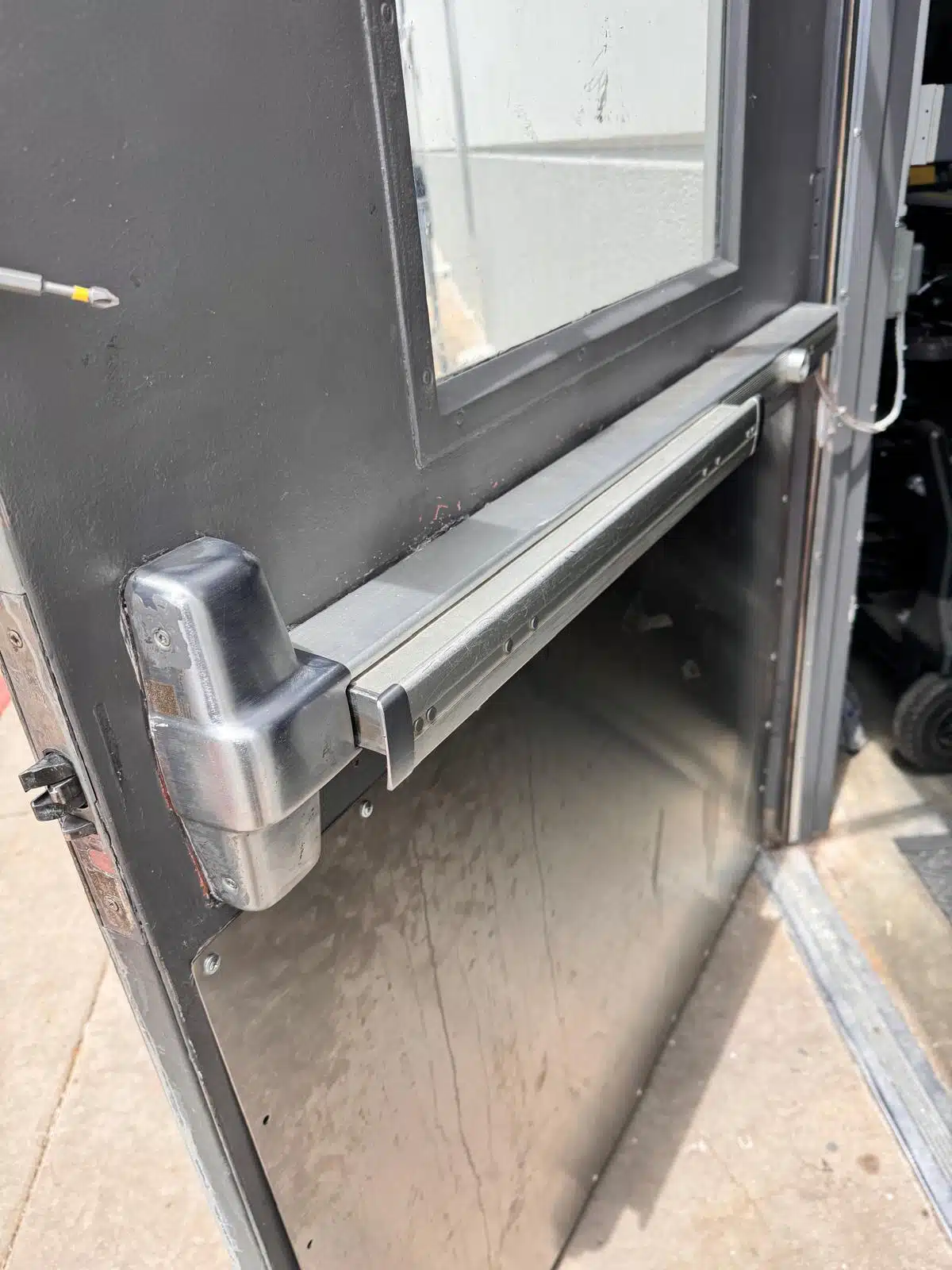
What the device is for
One Motion, No Thinking, No Key
An exit device exists so that a person who is frightened, in smoke, or being pushed from behind can get out by falling against the door. That is the entire design brief.
Whether your building needs one is the fire marshal's call, not the locksmith's. Making sure the one you have actually works is ours.
Requirements come from occupancy type and occupant load under the building and fire codes your jurisdiction has adopted. We do not guess at that and we do not tell you what an inspector will decide. What we can tell you is that a device which is fitted but does not latch correctly fails an inspection exactly as thoroughly as no device at all, and that is the most common thing we are called out to.
The second most common is worse. A padlock, a chain, a slide bolt or a deadbolt added to an exit door because of a break in. It is understandable and it is a serious violation, because it converts an exit into a trap. There is always a compliant way to secure that door instead, and it is usually cheaper than the fine.
Installation follows the published requirements for exit routes, including the OSHA exit route rules that apply to the workplace side of it.

Device types
Three Families, Chosen by the Door
The right device is decided by the door itself: single or pair, frame material, and whether the opening is fire rated.
Rim Devices
The latch mounts on the surface of the door and catches a strike on the frame. The most common and the most economical, suited to single doors and to the active leaf of a pair. Straightforward to retrofit on most existing openings.
Mortise Devices
The lock body sits inside a pocket cut into the door edge. Cleaner in appearance and stronger where the door takes heavy traffic, but it needs the door prepared for it, so it is usually specified at fit out rather than retrofitted.
Vertical Rod Devices
Rods run to the top and bottom of the door, latching into the header and the floor. This is what pairs of doors without a centre mullion need, and it is what tends to drift out of adjustment first, so it is the one worth checking annually.
Why businesses call
What Usually Prompts the Job
Inspection Write Up
The fire marshal noted an exit device that is missing, seized, or not latching. There is normally a deadline attached.
New Fit Out
A space being built out before opening, where exit hardware is on the checklist alongside everything else.
Chained Exit Door
Somebody chained or padlocked a rear exit after a break in. It needs replacing with something compliant this week.
Bar Will Not Latch
The door swings back open, or has to be shouldered shut. Usually alignment or a worn strike rather than the device itself.
Occupancy Change
The use of the space changed and the requirements changed with it. Common when a unit turns over to a different kind of tenant.
Damaged in a Break In
The device was forced or the frame is bent. Both get assessed together. See break in repair.
Doors Propped Open
Staff propping an exit because the bar is awkward. That is a hardware problem masquerading as a discipline problem.
Alarmed Exit Needed
An emergency exit that keeps being used as a shortcut. An alarmed device stops the habit without blocking the exit.
How we install
What Gets Checked on an Exit Door
Door and frame before hardware
Dimensions, frame material, hinge condition and how square the opening actually sits. A device bolted onto a dropped or twisted door will not latch reliably no matter what it cost.
Latch check, every time
The door is released, allowed to close on its own, and confirmed latched. Repeatedly. A latch that catches nine times out of ten is a fail, and it is the single most common defect we find.
Fire rated openings stay rated
A fire rated door needs fire rated hardware and must latch every time. Dogging, which holds the latch retracted for daytime use, is not permitted on those doors. If yours is rated, we say so and specify accordingly.
Nothing added that blocks exit
No chains, no padlocks, no thumb turn requiring a second action, no key needed from the inside. If a door genuinely needs to be secure against entry, that is solved on the outside face, not by making it harder to leave.
Outside trim to suit
Exit only, keyed lever, or an electric trim tied to access control. The inside is fixed by code. How the outside behaves is where you actually have choices.
Closers checked with it
An exit device and a door closer work as a pair. If the closer is weak, leaking or misadjusted, the door will not reach the latch, and replacing the bar alone will not fix the fault you were written up for.
Have an inspection deadline?
Say so on the call and we will tell you honestly whether we can meet it.
Where we work
Exit Device Work Across the Metro
Mobile service from Edmond, covering storefronts, offices, warehouses and halls.
Exit device questions
What Gets Asked Before an Inspection
Does my business have to have panic bars?
That is determined by occupancy type and occupant load under the codes your jurisdiction has adopted, and the fire marshal is the authority on it, not your locksmith. We will not guess on your behalf. What we will do is fit whatever is required correctly, and tell you plainly if what is on your door now would not pass.
Can I put a padlock on my rear exit at night?
No. Chains, padlocks and slide bolts on an exit door are a serious violation and they are how people die in fires. If that door is a security problem, it is solved on the outside face with the right hardware, or with an alarmed exit device that makes unauthorised use obvious without ever blocking the way out.
My bar is fitted but the door will not stay shut. Why?
Nearly always alignment rather than the device. A dropped hinge, a bent frame, a worn strike or a tired closer leaves the latch missing its keeper. That is why we assess the door, frame, hinges and closer together. Replacing the bar alone often fixes nothing.
What is dogging, and can I use it?
Dogging holds the latch retracted so the door pushes open freely during business hours. It is convenient on a normal exterior door. It is not permitted on a fire rated opening, which must latch every time. If your door is rated, we specify hardware without it and explain why.
Can the outside stay locked?
Yes, and that is the normal arrangement. The inside always releases with one motion and no key. The outside can be exit only with no trim at all, keyed for staff, or wired to a reader. Securing entry is fine. Restricting exit is not.
How quickly can you fit one?
Depends on the device. Common rim devices are often stocked or available quickly, while mortise and fire rated hardware carries a lead time. If you have an inspection deadline, tell us the date on the first call and we will give you a straight answer about whether it is achievable rather than finding out late.