
Rekey or Replace Your Locks?
One question decides it, and it is not the one most people ask. Here is how to work out which you actually need before anyone quotes you.
The deciding question
Is the Problem the Key, or the Lock?
If the answer is the key, rekey. If the answer is the lock, replace. Nearly every case resolves on that one distinction.
Someone might have a key they should not have. That is a key problem, and buying new hardware to solve it is spending money on the wrong component.
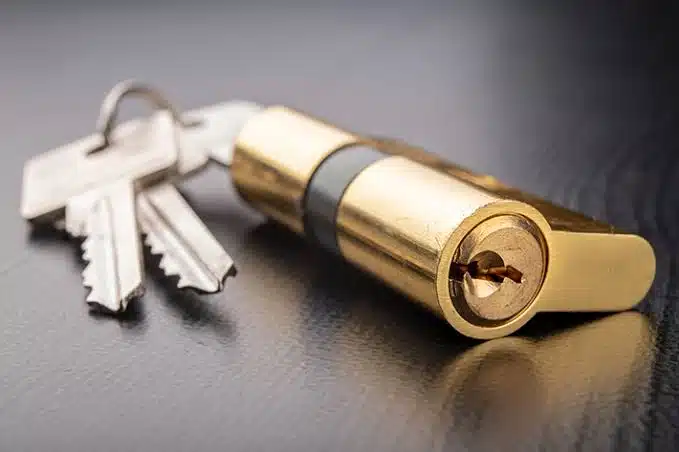
Rekeying changes the pins inside the cylinder so a new key works and every old key stops working. The hardware stays on the door. You pay for skilled labour rather than for a new deadbolt, and on a whole house that difference is substantial.
The lock is the problem when it is worn out, damaged, forced, or was never right for the door in the first place. A key you have to jiggle, a bolt that will not throw fully, a knob with no deadbolt behind it, or a cylinder that turns and moves nothing. No amount of repinning fixes any of those.
The third case is upgrading deliberately, which is neither of the above. Moving to a smart lock, adding a deadbolt where there is none, or going to restricted keys for key control. Those are replacements by choice rather than by necessity.

Straight comparison
What Each One Actually Gives You
Rekeying
Cheaper, faster, and done on site in minutes per cylinder. Old keys stop working permanently and several doors can be brought onto one key at the same time. What it does not do is improve the hardware. A weak lock rekeyed is a weak lock with a different key.
Replacement
Costs more because you are buying hardware as well as labour. In exchange you can raise the grade, add functions the old lock did not have, and start from components that are not already worn. The right answer when the existing hardware has genuinely reached its end.
Both, Usually
The most common real world outcome. Replace the two doors where the hardware has failed or was never adequate, rekey everything else to match, and finish with one key for the whole property. That is almost always the best value on a house.
Quick reference
Which One Fits Your Situation
Just Moved In
Rekey. The locks are fine, you simply have no idea who holds a key. See house rekeying.
Key Lost or Stolen
Rekey. A key problem in its purest form. Nothing about the hardware has changed.
Tenant Moved Out
Rekey. Standard turnover, one cylinder on a master keyed building.
Key Has to Be Jiggled
Replace. The cylinder is worn and it will fail, usually at the least convenient moment.
Bolt Will Not Throw
Depends. Often alignment rather than the lock. Worth having looked at before buying anything.
After a Break In
Both. Replace what was forced, rekey the rest, and fix the frame. See break in repair.
No Deadbolt Fitted
Replace, or rather add. There is nothing to rekey. The door has no real lock on it yet.
Keys Keep Getting Copied
Replace, with restricted keys. Rekeying resets the problem without solving it. See high security locks.
Worth knowing
Five Things That Change the Answer
Compatibility
Rekeying only unifies doors whose cylinders can accept the same key. A house with hardware from three different manufacturers may need one or two swapped before the rest can be keyed alike.
The frame outranks both
If the strike plate is screwed into trim rather than framing, neither rekeying nor a new lock changes what happens under a kick. That upgrade costs less than either and matters more.
Grade, not brand
If you are replacing anyway, the ANSI grade is what to ask about. Grade 1 and Grade 2 are what belong on an exterior door. Below that you are buying a handle that happens to lock.
Do it all in one visit
The first door carries the callout and the rest are cheaper. Splitting the work across two visits costs more than doing everything at once, including the doors you were unsure about.
Who is telling you
Replacement is worth more to a locksmith than rekeying. If someone recommends new hardware everywhere without examining what is on your doors, get a second opinion.
Commercial is different
On a business the question is usually not rekey or replace but how the building should be keyed afterwards. See master key systems.
Not sure which one you need?
Send a photo of the lock and the door. You will get a straight answer, free.
Common questions
Rekey Versus Replace
Is rekeying less secure than fitting new locks?
No. A rekeyed cylinder is exactly as secure as it was before, and every old key stops working permanently. What rekeying does not do is upgrade weak hardware, so if the lock was inadequate to begin with it remains inadequate afterwards. That is an argument for replacing that particular lock, not an argument against rekeying generally.
How much cheaper is rekeying?
Substantially, because you are paying labour rather than hardware, and the saving grows with every door since the lock itself is the expensive component. The exact difference depends on what hardware would otherwise be bought, which is why both options are quoted before anything is done.
Can every lock be rekeyed?
Most standard pin tumbler cylinders from the major manufacturers, yes. What blocks it is hardware too worn to hold a reliable pinning, cylinders from different makers that will not accept a common keyway, and some proprietary or restricted systems that need authorisation. All of it is identified before quoting.
Can I rekey locks myself with a kit?
Retail kits exist and work on some brands for a single lock. Where people run into trouble is with mixed hardware, with keying several doors alike, and with reassembly, since a cylinder rebuilt slightly wrong fails weeks later at an awkward moment. For one interior door it is reasonable. For securing a house you have just bought, it is not where to economise.
Should I rekey or replace after a break in?
Both, in most cases. Anything forced gets replaced rather than reused, since a bolt or housing can be damaged without looking it. Everything else gets rekeyed, because you no longer know what was taken from inside. The frame repair matters as much as either.
Does rekeying let me use one key for the whole house?
Yes, provided the cylinders are compatible. Front, back, garage side door and shed on a single key is one of the most requested outcomes and it happens during the same visit. Where one lock will not join the group, swapping just that cylinder is usually cheaper than living with two keys.