
Car Lockouts in Oklahoma Heat
If a child or a pet is inside a locked car, call 911 immediately. Do not call a locksmith first and do not wait for one. Everything else on this page is secondary to that.
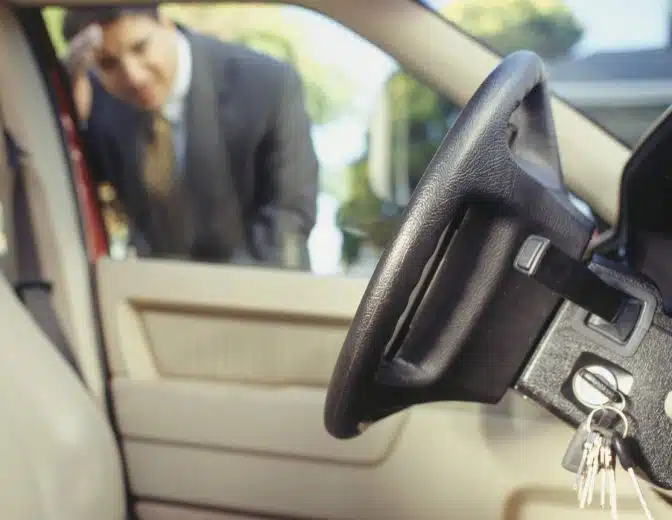
Why minutes matter
Cars Heat Faster Than Almost Anyone Expects
The numbers below come from the National Highway Traffic Safety Administration, not from us. They are the reason this page exists at all.
NHTSA reports that a vehicle's interior can rise about twenty degrees in as little as ten minutes, and can reach roughly fifty degrees above the outside air.
On an Oklahoma afternoon in the nineties, that is an interior well past anything a person can tolerate, reached before a locksmith could realistically arrive from anywhere.
Two things people believe that are not true, both stated plainly by NHTSA. Cracking the windows does little to change the interior temperature. Parking in the shade does little either. Neither is a safety measure.
And children are not small adults here. NHTSA notes that a child's body temperature rises three to five times faster than an adult's, and that deaths have occurred on days as cool as sixty degrees. Heatstroke begins at a core temperature around 104 degrees.
Full guidance is on the NHTSA child heatstroke prevention campaign.

If someone is inside
What To Do, In Order
This applies whether it is your car or a stranger's in a car park.
Call 911 First
Not a locksmith, not a family member, not the shop the car is parked outside. Emergency services are equipped for this and will arrive faster than anyone else. Stay on the line and stay with the vehicle. NHTSA's guidance for a bystander seeing a child alone in a locked car is to act immediately and call 911.
Stay and Keep Watching
Do not leave to look for help. Tell the dispatcher what you can see: whether the person or animal is responsive, whether they are sweating or have stopped, whether they are in direct sun. That information changes how the call is prioritised.
Follow What Dispatch Tells You
They will tell you whether to wait or to act, and that instruction is based on information you do not have. Once someone is out, cool them and get them assessed even if they seem recovered, because heat injury is not always visible.
Prevention
How These Situations Actually Start
NHTSA reports that more than half of pediatric vehicular heatstroke deaths happen because a caregiver forgot. This is not a story about negligent people.
Routine Changed
The parent who does not usually do the daycare run. Broken routine is the single most common circumstance.
Something In the Back
Put your phone, bag or badge beside the car seat. You cannot leave without it, so you cannot leave without checking.
Check Every Time
Look in the back before locking and walking away. Every trip, including the short ones, so it becomes automatic rather than a decision.
Lock the Car at Home
NHTSA notes many deaths involve children who got into an unlocked vehicle themselves and could not get out. Lock it in the driveway and the garage.
Keys Out of Reach
A car that cannot be opened by a child is a car a child cannot become trapped in.
Ask To Be Called
Arrange for daycare or school to call you if the child does not arrive. It closes the gap the forgetting creates.
Pets Too
The same physics applies. Dogs cool themselves far less efficiently than people and a cracked window does not help them either.
Keep a Spare Key
Most adult lockouts become urgent because there is no second key anywhere. See car key replacement.
When nobody is inside
The Ordinary Summer Lockout
Most calls are simply keys on the seat. Heat still matters, because standing in an Oklahoma car park for an hour is its own problem.
Get out of the sun
Wait somewhere shaded or indoors nearby and tell us where you will be. There is no reason to stand beside the car while you wait.
Ask for a real time
Not soon. An actual estimate, so you can decide whether to wait or make other arrangements. C&R runs 6:00 AM to 9:00 PM seven days, with limited response outside that.
Heat breaks things too
Summer is when worn keys finally snap and tired cylinders seize. If your key has been sticking for weeks, August is when it stops working entirely.
Do not force it
A hot cylinder and a worn key is exactly how a key snaps off in the lock, which turns a lockout into a lockout plus an extraction plus a new key.
Locked out, nobody inside?
Call and you get a time and a price before anyone sets off.
Common questions
Heat and Car Lockouts
My child is locked in the car. Should I call a locksmith?
No. Call 911 immediately and stay with the vehicle. Emergency services are equipped for this and will reach you faster than any locksmith. NHTSA reports that a vehicle interior can rise about twenty degrees in as little as ten minutes, which is far shorter than any callout. Once everyone is safe, a locksmith can deal with the lock.
Does cracking a window keep the car cool enough?
No. NHTSA states directly that rolling windows down or parking in the shade does little to change the interior temperature of a vehicle. Neither is a safety measure and neither makes it acceptable to leave a child or an animal in a parked car for any length of time.
How hot does it actually get inside?
According to NHTSA, interiors can rise about twenty degrees in as little as ten minutes and reach roughly fifty degrees above the outside air. On a typical Oklahoma summer afternoon that produces conditions no person or animal can tolerate. Heatstroke begins at a core body temperature of around 104 degrees.
Is it only dangerous in summer?
No, and this is the part people find most surprising. NHTSA notes that a child can die in a hot car on a day as cool as sixty degrees, because a child's body temperature rises three to five times faster than an adult's. The risk is not limited to July and August.
What if I see a child alone in a locked car?
Act immediately and call 911, which is NHTSA's own guidance for bystanders. Stay with the vehicle, describe what you can see to the dispatcher, and follow their instructions. Do not leave to find the driver first, because that time is the thing you cannot get back.
Why do more lockouts happen in summer?
Partly routine changes during school holidays, and partly hardware. Heat is when worn keys finally snap and tired cylinders seize, so a key that has been sticking since spring tends to give out in August. If yours needs jiggling, replacing it in June is considerably cheaper than dealing with it in a car park in August.